
Please read candidacy statements for the IASR Board Election and submit your vote by February 13, 2026.
Candidate for Member-at-large, Mentorship: Irina Esterlis, PhD
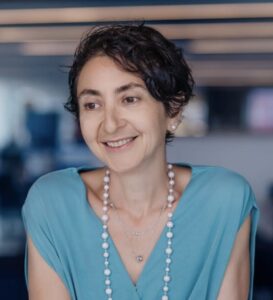
Professor, Traditional track
Department of Psychiatry, with Secondary appointment
in the Departments of Radiology and Biomedical Imaging and
Psychology
Candidacy Statement
I should be considered for this position due to my commitment to and success in mentorship for about 20 years of my tenure at Yale University. My own training experiences include a wide variety of mentorship styles and through these experiences, as well as experiences with many mentees from high school students to Associate Professors, I have learned how to mentor, how not to mentor, and how to adapt my skills to individual needs of my mentees – both in individual and group settings. My interest in serving for IASR specifically is multifaceted:
1. This position answers directly to the Board of Directors and I believe may have a greater possibility of contributing to the growth of the junior members and community at large;
2. IASR draws membership from a very diverse community but has a very defined role of suicide prevention across the globe;
3. I am deeply committed to the study of the many aspects of suicide through clinical and research applications; and
4. most importantly, mentoring is the most rewarding and exciting part of my career. I believe I can significantly contribute to the mentoring mission of IASR through my individual efforts as well as working with the Board and mentees.
I have several goals to achieve during the tenure as Mentorship lead.
1. I want to ensure that individuals from different regional, ethnic and racial backgrounds are reached in order to help them grow as people and scientists. Three lived experiences have contributed to my personal growth as a person and scientist, as well as to my eagerness to help others. First, I am a woman scientist in a highly male/man dominated field and path (traditional track at Yale). Second, I am an ethnic minority with experiences of discrimination and abuse from a young age. Finally, I am a refugee and have encountered many obstacles due to lack of cultural awareness of those around me. I believe these lived experiences contributed to my resilience and survival skills. I would greatly appreciate continued opportunities to help others grow in the face of adversity.
2. I will work to ensure the mentorship pool is representative of the many cultures and genders that compose IASR.
3. I will work hard to ensure that all the mentees and mentors feel safe in the group and individual meetings. Mentorship is a relationship and affects both mentor and mentee. A healthy relationship is essential to the development of successful scientists.
4. In addition, I will work hard to ensure we grow a strong mentee group across clinical, translational, and basic sciences.
Career Summary
I am a Clinical Neuropsychologist with expertise in the molecular imaging of brain disorders, with a focus on elucidating the pathophysiology of mood and trauma disorders and suicidality and developing novel targets for symptom reduction. Since the receipt of my first career award in 2008, I have conducted research with individuals at high risk for self-harm and suicide, including those with schizophrenia, bipolar disorder, and post-traumatic stress disorder. Recently, I expanded my work to the study of suicide in the aging populations given the high rates of suicide but low rates of risk identification in this population. For example, one of my current studies is examining the effects of social disconnection on suicidality in older individuals and whether certain mechanisms mediate this relationship. The work of my group has been presented at many conferences and published in high impact journals. Most importantly, we engage with the community and provide information on mood and trauma disorders and suicidality, and the contribution of social isolation to mental health. We meet with both providers and leadership of different organizations, as well as cultural ambassadors and general public in order to educate and, hopefully, reduce self-harm risk. I conduct this work with a great team of individuals in the Yale Translational Brain Imaging Program, where I am (co-Director). The group
consists of students, research staff, postdoctoral fellows and junior and mid-level faculty members. The diversity of backgrounds, expertise, and interests is inspiring and makes me excited to lead this inspiring team.
Candidate for Member-at-large, Mentorship: Peter M. Gutierrez, PhD
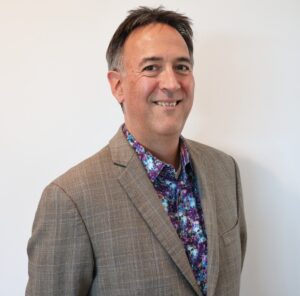
Professor, Department of Psychology, Florida State University
Executive Vice President, Research & Development, LivingWorks
Education.
Candidacy Statement:
I have been a suicidologist for my entire career. Our understanding of the complex interplay of reasons which lead people to suicidal crises, growing options for evidence-based treatments of those underlying causes, and better understanding of how to apply public health approaches to suicide means we may be on the cusp of reducing suicide rates in meaningful ways in the coming years. Key to that are creative collaborations between researchers, clinicians, population health experts, and local advocates. IASR is well positioned to gather lessons from work like this and help junior investigators make the most of it. As the Member-at-Large, Mentorship IASR Board member, I could help shape how the Academy accomplishes that work. Empowering our junior colleagues with this knowledge through a range of mentorship opportunities is an effective way to enhance global suicide prevention efforts.
Objectives:
I would like to expand IASR’s mentoring activities into a formal program with sufficient infrastructure and resources to sustain it over time. I will draw on the network of senior suicide research experts in the Academy to provide opportunities for formal and informal mentorship throughout the year. I believe the program would be most successful if it is vertically structured so that trainees, new investigators, mid-career, and senior researchers help and support those with less and more experience within the program. I will set the expectation that mentorship is a career-long activity so that as members gain experience and expertise, they have clear mechanisms for sharing that wisdom with the next generations of researchers.
Career Summary:
I have been a member of IASR since 2003, am quite familiar with the work of the Academy, and have a good understanding of the global suicide research landscape. I have attended, served as a mentor during the early career breakfasts, and presented at every International Summit. I served on the Board of the American Association of Suicidology for nine years (including as President) and co-directed the Military Suicide Research Consortium (MSRC) for 12 years. I spent 10 years at Northern Illinois University training undergraduate and graduate students to conduct suicide research while a professor of clinical psychology. Then during my 16 years with the U.S. Department of Veterans Affairs I trained clinical psychology interns and post-doctoral fellows in suicide assessment, evidence-based treatments, and suicide research methodologies. Through MSRC we immersed graduate students and post-doctoral fellows in grant-funded suicide research across the full range of the problem for the U.S. military. Our 10 years of running a full day pre-conference workshop provided opportunities for over 150 trainees across multiple disciplines to learn from some of the leading experts in military suicide research. In my current position at LivingWorks I am constantly working to improve how we train and support our staff, trainers, learners, and helpers to be impactful suicide prevention professionals.
Candidate for Member-at-large, Mentorship: Paul Nestadt, MD
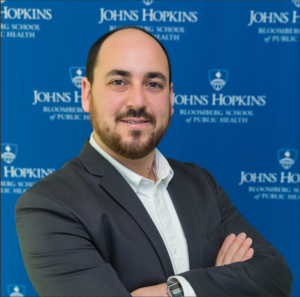
Associate Professor, Department of Psychiatry & Behavioral Sciences, Johns Hopkins University School of Medicine
The James Wah Professor of Psychiatry & Behavioral Sciences
Fellow, Provost’s Fellows for Public Engagement, Johns Hopkins University
Candidacy Statement:
My career centers on advancing suicide prevention through education, epidemiology, and public health. Since residency, IASR has been my professional home. I’ve attended every IASR/AFSP Summit since graduating and presented at each since 2017. IASR is where I found my mentors, collaborators, and colleagues. It has become even more integral since my mentor, Dr. Wilcox, became president. IASR is the one international meeting I never miss. It represents the highest quality science and the strongest sense of community in our field. My first major mentored grant from the AFSP served as the pilot for my NIH K23 and launched my research program in psychological autopsy and the study of practical suicide risk factors such as opioids & firearm access. I am seeking the role of Mentorship Member-at-Large because mentorship has been foundational to my own career development and because I believe it is one of the most powerful tools IASR has to strengthen, diversify, and sustain the global suicide prevention efforts.
Objectives:
My primary objective as Mentorship Member-at-Large would be to strengthen and formalize meaningful 1-to-1 mentorship connections, particularly for early-career members. Early in my own involvement with IASR, I was paired at different times with Dr. Paula Clayton and Dr. Bill Coryell, each of whom helped me see where I could fit into the larger context of suicide prevention. Those relationships did not require intensive or formal programming; often they involved something as simple as meeting for coffee, talking through career
direction, or receiving candid guidance at a pivotal moment. But the impact was profound. I would prioritize this type of intentional pairing, recognizing that even limited but thoughtful engagement from senior or mid-career members can provide clarity, confidence, and direction to trainees and early-stage investigators. I would advance mentorship models that are flexible, low-burden, and responsive to individual needs, while also promoting mentor recognition & support. I would also be a strong advocate for early-career members within Board deliberations.
Early-career researchers are the future of suicide prevention science, yet they are entering the field during a period of unprecedented uncertainty, including global shifts and contractions in research funding. IASR can play a critical role in helping early-career members navigate these challenges through mentorship, connection, and international collaboration. Finally, I would work to ensure that mentorship efforts are inclusive and globally oriented, with attention to barriers, power dynamics, and the diverse contexts in which IASR members work.
Career Summary:
I am the James Wah Professor of Psychiatry at Johns Hopkins, where I previously completed residency and a fellowship in psychiatric epidemiology and now serve as Medical Director of the Center for Suicide Prevention. My research bridges psychiatry and public health, focusing on suicide and overdose epidemiology, particularly firearm and opioid access. As PI on NIH- and CDC-funded projects, I use psychological autopsy methods to identify intervention points in high-risk populations. I have authored over 150 papers, chapters, and editorials.
Alongside my research, I remain actively engaged in clinical care as Director of the McGlasson Anxiety Disorders Clinic and as an attending psychiatrist in the Esketamine Treatment and Motivated Behaviors Units at Johns Hopkins. I am deeply involved in mentorship and teaching across career stages, including medical students, residents, fellows, and early-career faculty, and I view mentorship as a core professional responsibility. I wear many hats, but a common theme has often been connecting mentees to mentors. I am the co-director of our residency’s Public Health Track, where my job is to pair our psychiatry trainees with research mentors in the School of Public Health. I serve as a Deputy Editor for the Johns Hopkins Psychiatry Guide, which pairs trainees with senior authors to coauthor each module. I was longtime chair of the Early Career Committee for the Maryland Psychiatric Society and now chair the CME Committee. I also chair the Maryland Suicide Fatality Review Committee and serve as a Scientific Advisor for the AFSP. I regularly work with journalists, legislators, and advocates to translate suicide research into real-world change. This work has reinforced my belief that while individual scientists and clinicians can make meaningful contributions, we can accomplish far more when we act together as a cohesive, international organization. IASR is uniquely positioned to lead that effort.
Candidate for Member-at-large, Membership: Kelly Posner, PhD
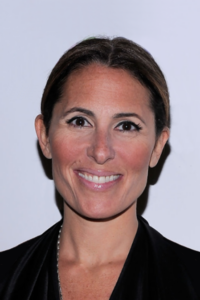
Director and Founder, Center for Suicide Risk Assessment/The Columbia Lighthouse Project, Department of
Child & Adolescent Psychiatry, New York State Psychiatric Institute, New York, NY
Professor of Medical Psychology (in Psychiatry) Department of
Psychiatry, Columbia University College of Physicians & Surgeons, New York, NY
Chair of the Governor’s Veterans’ Suicide Prevention Task Force in New York
Candidacy Statement:
I am honored to be considered for the Member-at-Large (Membership) position on the IASR Board. Throughout my career, my work has focused on building rigorous, policy relevant suicide prevention science that is deployable at scale and sustained through international collaboration. IASR has long represented the scientific home where discovery, translation, and mentorship intersect, and I am eager to help strengthen and expand that community globally. My interest in this role is driven by a deep commitment to growing and diversifying the suicide prevention research workforce. Since attending the inaugural IASR/AFSP Suicide Summit in 2015, IASR has become my scientific home and has been instrumental in expanding and deepening my professional network and I would be grateful for the opportunity to pay it forward. Through decades of cross-national collaboration with researchers, clinicians, policymakers, and systems leaders, I have seen firsthand how inclusive scientific networks accelerate impact. As Member-at-Large (Membership), I would work collaboratively with the Board and membership to leverage these global connections to expand IASR’s reach, strengthen member engagement, and ensure IASR remains a professional home for researchers across disciplines, career stages, and geographies.
Objectives:
If elected, my priorities would include:
Global Membership Growth and Engagement: Leverage an extensive international network across healthcare systems, governments, academia, and multilateral partners to attract new members—particularly from underrepresented regions, including low- and middle-income countries (LMICs) and conflict-affected settings—where suicide prevention research capacity is urgently needed.
Articulating and Delivering Membership Value: Strengthen IASR’s value proposition by highlighting opportunities for collaboration, data harmonization, dissemination, and real-world impact. Emphasize how IASR uniquely bridges rigorous science with policy and implementation, drawing researchers who want their work to influence practice and save lives.
Mentorship and Workforce Development: Work collaboratively with the Member-at-Large (Mentorship) to support IASR’s role in mentoring early-career researchers and investigators from LMICs by fostering connections to senior scientists, collaborative projects, and training opportunities. My work has consistently focused on building capacity by bringing researchers into global networks where science and impact reinforce one another.
Collaborative Fundraising and Financial Sustainability: Work closely with IASR board co-members to identify collaborative fundraising opportunities that align scientific excellence with sustainability—engaging foundations, governmental partners, and philanthropic stakeholders who value research with measurable public-health impact. Strengthening IASR’s financial base is essential to supporting inclusive membership growth and programming.
Career Summary:
I am a full professor at Columbia University Department of Psychiatry and Founder & Director of the Columbia Lighthouse Project. My career has been dedicated to advancing suicide prevention through the development, validation, and global dissemination of evidence-based measurement tools and implementation strategies. I led the development of the Columbia-Suicide Severity Rating Scale (C-SSRS) and the Columbia Classification Algorithm of Suicide Assessment (C-CASA), creating a common scientific language now embedded in policy and practice across all U.S. states and most countries worldwide. This work has been adopted globally across the continuum of care, all sectors of society, including extensive implementation in low-resource and international settings. The scientific foundation of this work, supported by more than 50 predictive studies and over 5,000 citations to national and global research, demonstrates how rigorous research can drive global systems change.
Through sustained collaborations with governments, international partners, and research networks, my work has consistently linked science to policy, practice, and workforce development. I bring to IASR a translational perspective, an unparalleled international network, and a long-standing commitment to organizational growth and collaboration, which I would actively draw on to grow and strengthen IASR’s global membership.
In closing, IASR plays a critical role in shaping the future of suicide prevention science. I would be honored to serve as Member-at-Large (Membership) and to work collaboratively to expand IASR’s reach, strengthen its financial and scientific foundation, and ensure that researchers worldwide see IASR as a vital and welcoming professional home.
Register your vote
Only regular members can access this content. Please log in to view.
Please use the form above to vote.
Only regular members can access this content. Please log in to view.
If you are logged in and the form does not appear, please reload this page.
If you have any issue with access, please send your vote by email to
webmaster@suicide-research.org
with the subject: “Member vote”